Construction stage - building site
Drones are increasingly recognised in the construction industry as an important tool for collecting valuable data and information during the construction process.
Unlike traditional surveying methods, drones have contributed to several improvements in the construction sector, such as improving safety conditions and reducing costs, while being able to quickly cover large areas and easily create detailed 3D images of the construction site and the surrounding area.
Some of the key advantages of drones in the manufacturing industry are the following:
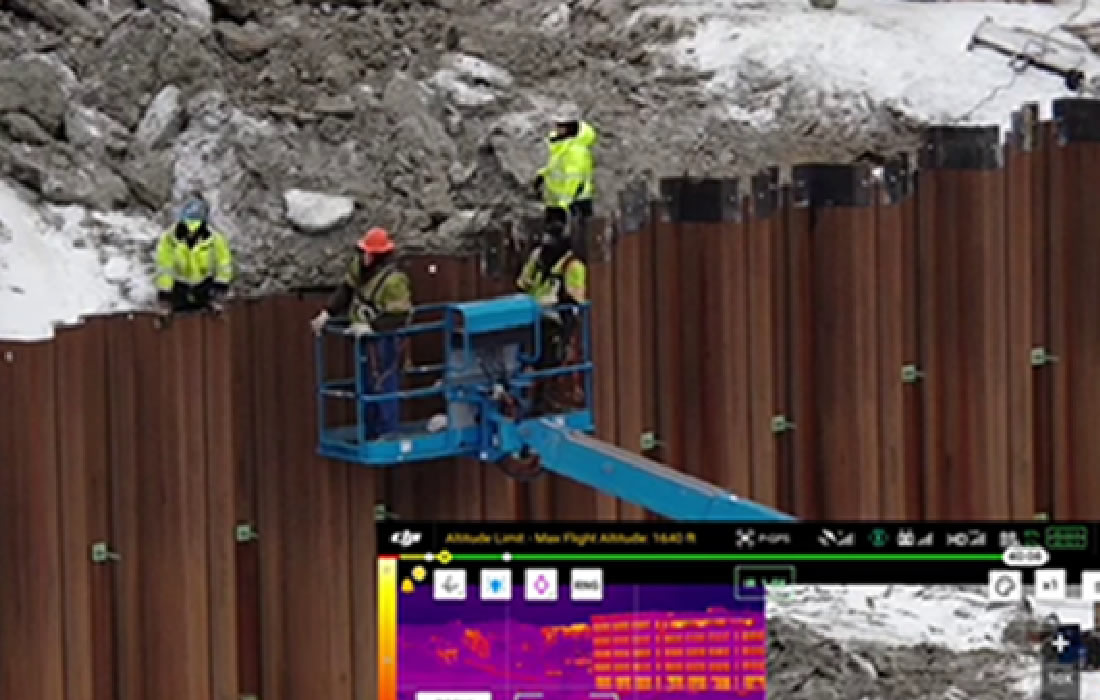
Safety - No human resources are required for high resolution inspection of the site of any height or area.
Time saving - Reduced supervision times combined with high-resolution images and data.
Detailed inspection - Thanks to advanced technologies such as high-resolution RGB/thermal/LiDAR payloads, the drones are able to capture micro-level details of construction quality, site progress, quantity of stock, resources and assets, etc.
High quality inspection - our trained pilots are able to fly very close to the inspected areas and objects. Together with our expert knowledge we are able to quickly produce quality reports for various stakeholders.
Indicative work in the construction stage with drones:
Site monitoring using drones
Construction progress monitoring
Pre-implementation mapping
Inspection of mobilization and equipment
Daily, weekly and monthly progress inspections
Survey for construction quality, safety and regulatory compliance
Building inspections
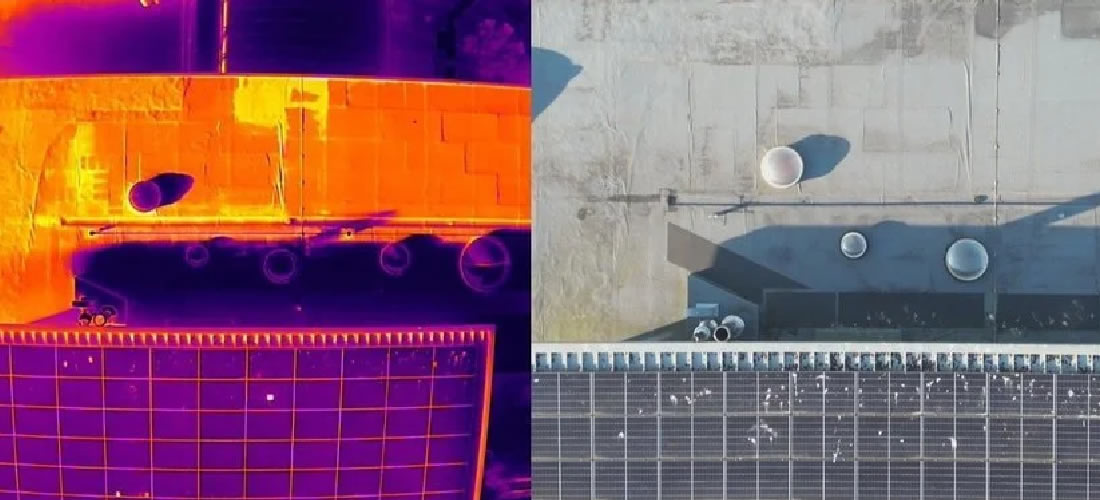
Drones equipped with infrared sensors not only collect data on the damaged parts of the building, but also provide important information on the quality of the construction.
It can help identify potential security threats due to age and quality of construction. Advantages of using UAVs to inspect building exteriors:
Speed: An experienced drone pilot can scan the outside of a building in minimum time.
Cost: With time being money, quick drone inspections not only cost much less than traditional inspections but are also safer. In addition, aerial photography that was previously cost-prohibitive with planes or helicopters is now widely available thanks to drones.
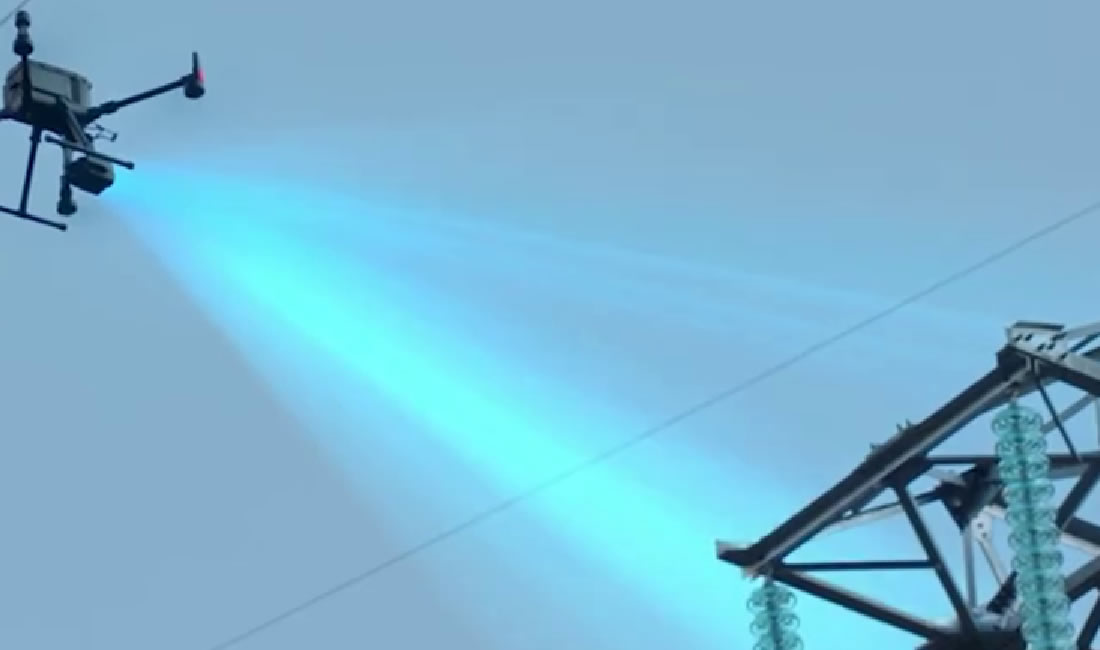
Safety:. Remote-controlled drones eliminate all risks for inspectors.
Manoeuvrability: Drones can hover over a specific area to check for potential problems and can move in places that human eyes could never see without assistance. Complex building exteriors that protrude at odd angles can be easily inspected with drones.
Visual clarity: Cameras with up to 8K resolution can reveal defects and/or damage that the human eye may not notice. Thermal cameras on drones can detect heat differences that reveal leaks.
Shareability: Digital videos and images are easy to share among many stakeholders, so that when time is precious everyone who needs to know about an external problem can view them in high resolution and high quality.
Manoeuvrability: Drones can hover over a specific area to check for potential problems and can move in places that human eyes could never see without assistance. Complex building exteriors that protrude at odd angles can be easily inspected with drones.
Visual clarity: Cameras with up to 8K resolution can reveal defects and/or damage that the human eye may not notice. Thermal cameras on drones can detect heat differences that reveal leaks.
Shareability: Digital videos and images are easy to share among many stakeholders, so that when time is precious everyone who needs to know about an external problem can view them in high resolution and high quality.
Indicative work on building inspections with drones:
Inspection services for buildings, structures and facades
Inspection of deterioration in the age of the asset
Roofing inspection
HVAC Inspection (heating, ventilation, and air conditioning) Heating, ventilation, and air conditioning (HVAC)
Building Safety Inspection
Thermal integration research
